
Arts Management
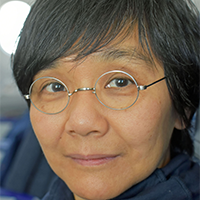
MINOGUCHI Kazumi
Arts appreciation and its advocacy in the 21st century are now facing intricate transition. It is simply because erosion of the existing media that create and communicate value and evaluation of arts is quickly in progress, and as what has been brought about by this erosion, the lapse between creators and those who appreciate any arts forms impairs a constructive and cooperative relationship between the both.
This confusion, however, reveals at the same time that now any art forms having their anchors in the western world no longer can claim their superiority over other parts of the globe. Value and creation of the arts are made relieved from the 19th century style leash of the western world.
This is my understanding on what is going on with arts, especially with music today. From the cradle to the grave, this music is our music, not “theirs,” “imported,” “imposed” or “brainwashing.”
To enhance the human infrastructure vitalizing the synergy of each arts sectors (theaters / concert halls/ higher education/philanthropic fund / artists / audience), the roles of arts management are being intensified, and its expertly trained practitioners are mandatory for facilitation of arts activities. Music requires them most, because it is essential need for both artists and audience to properly prepare an ideal place, equipment and environment for live performance by certain period of day and time so that the both can encounter creative moments at highest standard.
I sincerely hope that this new school will be a place for those who are young and earnest to be experts of directing performance institutions and venues. With the sense of balancing creation and administration, I believe it is the mission, mine and yours, to create the Asian arena of music and musicians that consists of the global community of music on an equal basis.
Kazumi W. Minoguchi
MINOGUCHI Kazumi
Professor in Music and Performing Arts Management. As a Project Coordinator and an ex-Programming Director of Suntory Hall since 2008, Minoguchi has a long experience in artistic programming and administration at performing arts venues; Casals Hall (1987-2000), the Dai-ichi Seimei Hall (2001-2008) and Suntory Hall (2008-present). Expertise of concept making and program building for chamber music, Kazumi designed and launched Suntory Hall Chamber Music Garden in 2011. She is also one of the earliest advocates of community engagement programs with musicians in Japan, and the founding coordinator of the Revitalization Project for Public Concert Venues operated by the Japan Foundation for Regional Art-Activities. Career development of young musicians is one of her life-long interests; she was a lecturer at the Tokyo National University of Arts (the Geidai) researching the career management of young performers (2006-2009). In April 2014 she joined the Music Research Centre of Ueno Gakuen University for the study of music workshop facilitation. She translated and edited for Japanese readers “Beyond Talent-Creating a Successful Career in Music” by Angela M. Beeching. Born in Yokohama in 1960, she graduated the International Christian University, majoring in the Greek and Latin Literature.
Reconciling the diversity of individuals with the inclusion of diverse people within society is always accompanied by a dilemma. In this society where various social divisions continue to arise, and as we look ahead to a shrinking society, how can we create spaces, relationships, and a social environment in which we, as diverse individuals, can remain diverse?
In this graduate school, while continuously engaging in various artistic activities, practical research, and proposals addressed to society through them, I seek to build a collaborative network to consider and practice the role of art in this increasingly divided society. Through artistic projects, practice-based research, and public engagement, I aim not only to examine the social function of art but also to actively intervene in social realities through it. Specifically, within the fields of cultural policy and arts management, I aim to provide education grounded in practice, while articulating experiential knowledge through research and critical discourse.
Building on my research and practice concerning the expressive activities of people with disabilities as my primary point of departure, I have explored and implemented accessibility in the arts, the role of art workshops, and approaches to cultural policy and projects in local communities, and have spoken and written about those experiences. From a cultural policy perspective, organic collaboration between culture itself and related fields has long been advocated; however, in this lab, I place particular emphasis on the intersections of art and fields such as welfare, education, and community development, and aim to expand collaborative initiatives both within and beyond the university.
Here, I would like to consider management not only in the general sense of business administration or organizational operation, but also by returning to its etymological roots, to include the meaning of “handling the horse by its reins.” It involves acquiring the ideas and skills necessary for artistic activities to sustain themselves, whether autonomously or through co-creation with society, and reflecting firsthand on how those “reins” should be handled. The perspectives and capabilities cultivated through this process will be important for envisioning spaces in which we, as diverse individuals, can remain diverse. Furthermore, in this increasingly unpredictable society, such perspectives are vital not only in the arts but across a wide range of fields.
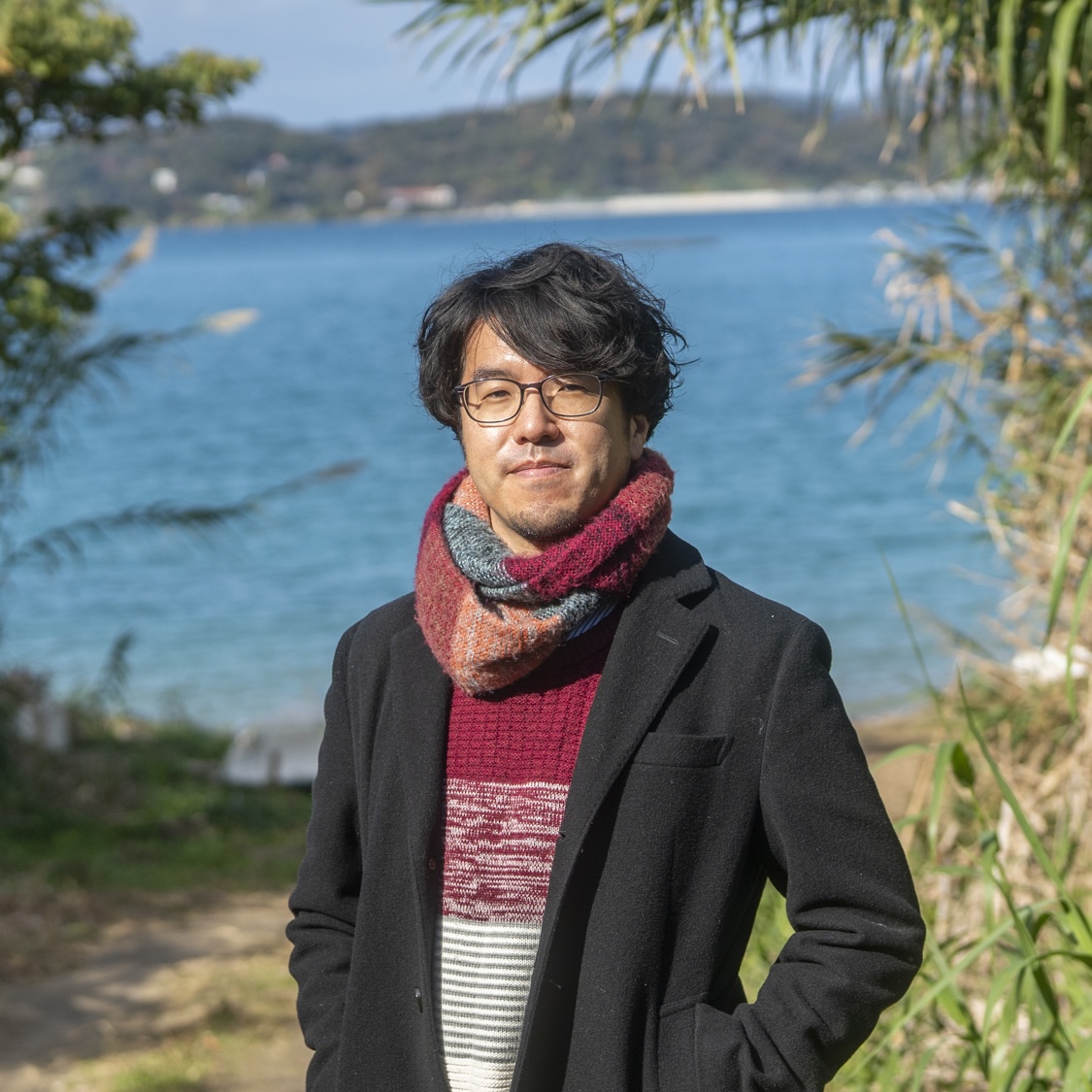
NAGATSU Yūichirō
Born in 1985; Associate Professor in Cultural Policy and Arts Management; BA in Music, Department of Music Creativity and the Environment, Faculty of Music, Tokyo University of the Arts, MA in Music, Graduate School of Music, Tokyo University of the Arts, and Ph.D. from Tokyo University of the Arts. In addition to conducting research and practice focusing on expressive activities by people with disabilities, he also broadly undertakes management, production, and facilitation for cultural projects and art workshops. He held positions as a researcher at Keio University, and as an assistant and associate professor in the Faculty of Design, Kyushu University, before assuming his current position. Major publications include Butai no Ue no Shougaisha (Disabled People on Stage) Kyushu University Press, 2018 and Art Management and Social Inclusion Suiyousha, 2021. He has also held positions related to cultural policy at the national and local government levels, including as a member of the Expert Committee for Promoting Cultural and Artistic Activities for Persons with Disabilities established by the Agency for Cultural Affairs and the Ministry of Health, Labour and Welfare. In addition to serving as the representative of the Art Meets Care Society, he holds executive positions in multiple academic societies in the fields of cultural policy and arts management.
What does the name of this Graduate School, “Global Arts” mean? You are invited to learn critical study and practice of arts that overcome the pain of globalization and the modernization driven by anthropocentrism.
The arts, along with politics, science, and religion, are the means by which we understand and engage with the world. In the sense that, unlike any of the others, it demands us to confront individually with pre-determined standards or values, it is also a means of resistance. It is an act of expression or appreciation, using sensory experience of what has not yet been seen, heard, or touched. It enables individuals to affirm, liberate, and emancipate themselves to feel differently from others.
The role of the curator has gradually come to be focused through critical theory since structuralism, which has led us to self-reflection on the function of art in society, including not only the artists and their works, but also the museums and collectors that surround them. At the same time, international exhibitions such as biennials and cross-cultural exchanges increased, and the expertise of curators, who were responsible for “translation” and “editing,” began to attract attention from the 1980s onward.
Later, in contrast to exhibition making and catalog editing based mainly on historical and aesthetics research, there was a growing emphasis on an empiricist approach that investigated a more organic relationship among the production process in art, the viewer, and society. In other words, not only learning about history or contemporaries and selecting what is of valuable, the workshops/lectures/performances/documentation/archives, etc., are used to critique existing knowledge through inquiries raised from personal experience. Social changes such as decolonization and new media technology have also been major factors in the emergence of the term “curatorial,” which refers to the incomplete act rather than producing a final outcome.
Traditional scholarship has viewed the empirical as personal and contingent, and has sought to explore a logic that transcends it. Emphasizing experience, on the other hand, means not constructing universal principles and criteria, but focusing on the interaction of different occurrences, believing in the plurality of values in the formation of intelligence and meaning. Curatorial is not scientific research, but a practice that refuses to represent, and tries to find reality in unknowable and dissent. Moreover, the aforementioned freedom is also understood in terms of the inter-dependence with others and environment, rather than considering the individual as an autonomous subject.
No matter how much our knowledge and technology evolve, the world will continue to be full of unknowns and uncertainties. I hope you will study and find a way to add another perspective on what is considered to be a single answer or correctness.
Sumitomo Lab. Website : http://sumitomo.geidai.ac.jp/
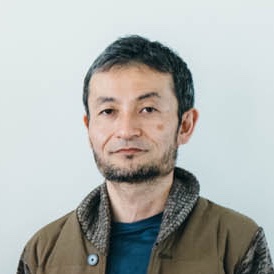
SUMITOMO Fumihiko
Professor in Curatorial Studies; MA in Cultural Studies, Graduate School Arts and Science, University of Tokyo. BA in Art History, University of Tokyo. He was director of Arts Maebashi from 2013 to 2021. As a senior curator at the Museum of Contemporary Art, Tokyo (MOT), he curated the exhibition Tadashi Kawamata: Walkway (2008) and he also worked for NTT InterCommunication Center [ICC] in Tokyo, where he organized exhibitions, Art Meets Media: Adventure in Perception (2005) and Possible Futures: Japanese Postwar Art and Technology (2005). He was also a Co-Curator of the Aichi Triennale 2013 (Nagoya), Beautiful New World: Contemporary Visual Culture from Japan (“798” Dashanzi Art District and Guangdong Museum of Art, Beijing, 2007) and Media_City Seoul 2010, and was the Artistic Director of Festival for Arts and Social Technology Yokohama [CREAM] 2009 and curator for Beppu Art Project 2012. He co-edited the book, From Postwar to Postmodern, Art in Japan 1945-1989: Primary Documents (Museum of Modern Art, New York / Duke University Press, 2012).
Curation
NAGASHIMA Kaku
Art is a special technique for connecting lonely souls with others. There are two types of art: creating things and creating events. The latter includes theater, dance, performance, and music (as well as events and festivals). Sometimes actions are performed solo, while other times people with different backgrounds or specialties come together, and create large-scale social projects that could not be accomplished on their own. In this research laboratory, we conduct research on the types, characteristics, and historical and social contexts of event-styled art from the perspective of dramaturgy (the technique of dramatic composition), while also acquiring practical knowledge for collaborative and operational purposes.
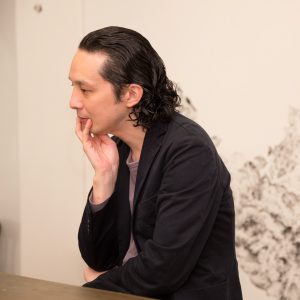
NAGASHIMA Kaku
NAGASHIMA specializes in dramaturgy in the field of performing arts. His involvement with theater came first as a performance subtitles operator and script translator, and has since participated in various scenes of performing arts as a dramaturg: a creative partner of directors and choreographers. His recent concerns have seen him seek ways to take ideas and know-how of the theater outside the theater space, involving him with various art projects. NAGASHIMA is also one of the FT Label Program Directors at the Tokyo Festival. His published works include “How to Build the House of Atreus” and translations of Samuel Beckett’s works, “Worstward Ho” as well as “The Complete Plays of Samuel Beckett” series (supervision, co-translation).
Curation
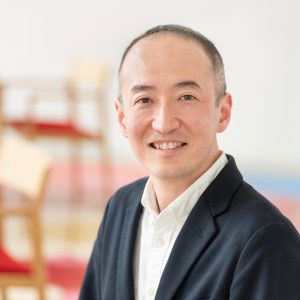
WASHIDA Meruro
In my research laboratory, we study artistic, social and critical curation from a contemporary perspective. Based on its genealogy, we explore the future of curation. Aimed towards students aspiring to become curators, the lab will be holding courses inviting guest lecturers active in the field of art, or exercises in reading literature related to curation in 2023. It also supports student-led exhibitions. The mission of this lab is to nurture students so that they become successful professionals in the field of curation.
WASHIDA Meruro
WASHIDA was born in Kyoto in 1973. He received his master’s degree from the University of Tokyo, where he studied art history. He specializes in contemporary art history and museum studies. He was the director of Towada Art Center from 2020 to 2025. He is the director of 21st Century Museum of Contemporary Art, Kanazawa since 2025. He was the curator of the Japan Pavilion at the 57th Venice Biennale held in 2017 and Aichi Triennale 2019. His major curatorial works for the 21st Century Museum of Contemporary Art, Kanazawa include Kanazawa Platform 2008 (2008); Kazuyo Sejima + Ryue Nishizawa / SANAA (2005); Atelier Bow-Wow (2007); Jeppe Hein (2011), Shimabuku (2013); and Mitsunori Sakano (2016).
Meruro Wahida CV (researchmap): https://researchmap.jp/meruro/?lang=en
In the Age of ‘Crisis’
As we enter the twenty-first century, we are witnessing a critical turning point in our history. Art and culture is no exception. New forms of art and culture are emerging rapidly in response to the processes of globalization, transformations in politics and the economy, and developments in technology.
We should not of course, be too optimistic. This new era could also be regarded as a period of ‘crisis.’ Neo-liberal globalization, the logic of late capitalism and radical developments in technology cannot guarantee us a better future. Art and culture, and the related fields of the humanities and the social sciences, are all facing a tough crisis. The term crisis does not, however, refer only to the deadlock point where everything collapses: rather, as Gramsci has suggested, it is a ‘critical’ moment in which current cultural, political and economical formations are being re-organized into a historical conjuncture.
Our new graduate school is seeking those able to think through new approaches in con-current art and cultural practices in order to overcome this crisis with “pessimism of the intellect, but optimism of the will.” In particular, we are seeking those who are actively engaged in the development of both art-cultural theory and practice across inter-disciplinary fields and with a trans-national perspective.
My main research topics are primarily the inter-relations between the arts, culture, society and politics; grounded in the fields of sociology, cultural studies and media studies. By specialising in ‘research’ you will have the opportunity to study, for instance; the connections between contemporary art and society, modernity and postmodernity and also the interconnections in contemporary culture, the creative industries, the transformation of the city, social movements and comparative cultural studies in Asia. You will also be able to explore topics related to your own research area within this programme.
As only a limited number of students can enter this course, we are able to create a flexible educational programme that can be aligned with each student’s research theme, and their regular lectures and seminars. We are greatly looking forward to working with those individuals who, together, are able to study, think and mobilize in order to produce new forms of art and culture in this age of ‘crisis’.
Mōri Lab. Website : http://mouri.geiai.ac.jp/
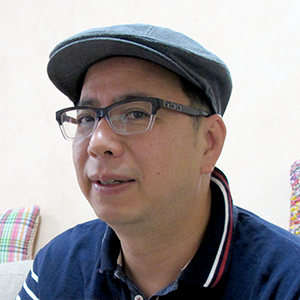
MŌRI Yoshitaka
Professor in Sociology and Cultural Studies. BA in Economics, Kyoto University, MA in Media and Communications and Ph.D. in Sociology, Goldsmiths College, London. His research interests are postmodern culture, media, art, the city and transnationalism. His publications include: Street no Shiso (The Philosophy in the Streets) NHK Publications, 2009 (available in Japanese and in Korean) and “Culture=Politics: The Emergence of New Cultural Forms of Protest in the age of Freeter” in Inter-Asia Cultural Studies 6/1, 2005; “The Pitfall Facing the Cool Japan Project: The Transnational Development of the Anime Industry Under the Condition of Post-Fordism” in International Journal of Japanese Sociology, The Japan Sociological Society, Wiley-Blackwel 2011, No 20; “J-Pop Goes the World: A New Global Fandom in the Age of Digital Media” in Made in Japan: Studies in Popular Music, T. Mitsui (Ed), Routledge, 2014; “New Collectivism, Participation and Politics after the East Japan Great Earthquake”, World Art, Routledge/Taylor & Francis, 5/2, 2015 (all in English).
Yoshitaka Mori CV (researchmap): https://researchmap.jp/yoshitakamori/
Today, in the age of globalization, neoliberalism, the COVID-19 pandemic, and war, our idea of politics, economy, and society are being severely shaken. Under these circumstances, what is the role of the humanities, arts and culture?
Advances in media and technology have drastically changed our living environment, triggering a drastic shift in the way we perceive the world. As technology changes, so do our values. It can sometimes make us stop thinking.
I have been examining the issues surrounding the intersection of politics and art, with a focus on the media environment. In a society in transition, the methodology of the study of culture must also change.
From the micro-scale surrounding our daily lives to the macro-scale surrounding global politics, I would like to reexamine various issues in contemporary society, crossing diverse domains such as capitalism, race, gender, liberalism, violence theory, life sciences, and so on. Also, I would like to not only learn existing knowledge, but rather to ask new questions and rethink or unlearn the “common sense” we have taken for granted from a different angle.
In the name of democracy, it is assumed that everyone is equal, but this is not the case in our life. The French philosopher Jacques Rancière once wrote that “dissent” is a situation in which one interlocutor simultaneously understands and does not understand what the other is saying. Politics will begin when we crack the existing system, which seems to be stable, and by highlighting the fact of unequal distribution. In this sense, art is really political. The future always resides in the present. Let’s explore the complex issues of contemporary society, and we will open up a new path.
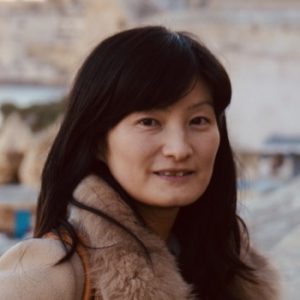
SHIMIZU Tomoko
Associate Professor in media and cultural theory. BA in Comparative Culture, University of Tsukuba; MA in Sociology and Cultural Studies, University of Birmingham, UK; and PhD. in Literature, University of Tsukuba. She has served as an associate professor at the University of Yamanashi, and the Faculty of Humanities and Social Sciences, University of Tsukuba. She has also served as a visiting scholar at the Reischauer Institute of Japanese Studies, Harvard University, USA (Fulbright Fellow 2010-2011) and Free University of Berlin, Germany (2018-2019). She is the author of Bunka to Bouryoku (Culture and Violence: The Unravelling Union Jack) Getsuyosha 2013, and Dizuni to Doubutsu (Disney and Animals: Breaking the Spell of Magic Kingdom) Chikuma Shobo 2021. Her co-translation works include: Notes Toward a Performative Theory of Assembly by Judith Butler, The Psychic Life of Power: Theories in Subjectivization by Judith Butler, Declaration by Antonio Negri and Michael Hart, and Surveillance after September 11 by David Ryan.
Shimizu Lab. Website:https://www.shimizu.geidai.ac.jp/